


I think one of the hardest parts of living with MS is that mentally, you still feel like yourself.
You still have dreams. Goals. Ambition. A million ideas. A long to-do list.
But your body? Your body can’t keep up. And that disconnect is crushing.
Lately, I’ve been realizing just how much of my life I’ve been planning around the energy I hope to have… instead of the energy my body consistently gives me. And I think a lot of women with MS are doing this without even realizing it.

Apple Podcast | Spotify
The Version of Me I Keep Planning For
I’ve started calling her “fantasy me.”
Fantasy me thinks:
I can clean the house in the morning and still have energy in the afternoon.
I can work all day and still make it to yoga at night.
I can come home from vacation and immediately do all the laundry.
And I never have to decide between taking a shower… or making myself breakfast.
And the thing, when I make these plans, they genuinely feel realistic. Because mentally, I can still SEE myself doing them. My pre-MS self did it all, without breaking a sweat.
That’s the hard part. It’s not like I invented this version of myself out of nowhere. She existed. I was the woman who could stack a million things into one day and somehow still function.
So now my mind keeps planning from HER energy… while my body is trying to live inside a completely different reality.
The Grief No One Talks About
I think that’s where a lot of the grief comes from with MS fatigue. Grieving the version of yourself who could do everything without thinking twice.
The version of you who was: capable, productive, reliable, high-functioning, the woman everybody counted on.
Especially if you were ambitious. Driven. The caretaker. The dependable one. The woman who always figured it out somehow.
And, look, there is NOTHING wrong with still wanting to dream big. You are still allowed to have goals. Drive. Ambition. The problem is not your ambition. The problem is trying to pursue that ambition with the same pace, pressure, and expectations you had before MS.
Because it starts to feel like you’re constantly falling behind in areas you KNOW you’re capable of. And that’s where the shame cycle begins. You tell yourself… “Maybe tomorrow I’ll be more organized.” “More efficient.” “More productive.”
Again… planning from fantasy you.
The Dangerous Part of “Pushing Through” MS Fatigue
If I’m being honest, there’s another layer to this too.
Sometimes when we push ourselves beyond our limits and DON’T crash immediately afterward… it feels like we “got away with it.” So we do it again. And again. Until eventually it catches up with us.
And that’s the hard truth I’ve been facing lately. Constantly planning beyond my energy has cost me – emotionally and physically.
Because MS fatigue isn’t just about feeling tired. It’s your nervous system. Your body. Your ability to function. Your ability to protect your health long-term. And the more I fight reality, the more exhausted I become.
The Shift I’m Trying to Make
So the question becomes: How do you stop planning from your ideal energy… and start planning from your actual energy? Not your best-day energy. Not your “if everything goes perfectly” energy. Your real-life energy.
Honestly, I don’t love this. Because at first, it feels like settling. It feels like lowering your standards.
But here’s the question I’ve been asking myself lately: How has planning from fantasy energy actually been working out for me? Yes, it helped me accomplish a lot. But it also came with a cost.
And I’m finally realizing that constantly planning beyond my energy is what keeps destroying trust with myself. Because every time the plan falls apart, my brain tells me: “You can’t handle this anymore.” “You’re unreliable now.” “You’re falling behind.”
But when I start planning from my ACTUAL capacity? Something shifts. I start following through again. I stop ending every day feeling like I failed. And I think that’s what so many women with MS are actually craving. Feeling capable again. Productive again. Feeling like we can still show up for the things and people that matter most.
What I’m Learning to Protect
So instead of asking: “How do I keep up with the life I used to have?”
I’m starting to ask: “What do I most want to protect from MS?”
Because there are things I don’t want MS to take from me. Motherhood. My family. Meaningful moments.
And protecting those things means protecting my energy differently now.
What This Looks Like in Real Life
And let’s be real… this sounds beautiful emotionally. But real life still exists.
Saturday morning still comes. There’s still laundry. Groceries. Work. Family. Life.
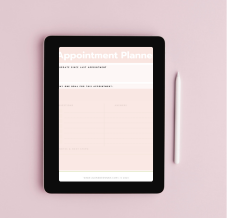
So one thing that has helped me tremendously is doing a weekly brain dump. Every Sunday, I get everything out of my head and onto paper: appointments, work, house tasks, everything.
Then I rank what matters most and only assign 1–3 important tasks per day.
Because I’ve finally realized: Everything costs energy. Driving. Traffic. Errands. Decision fatigue. Crowded stores. Recovery time afterward. It all adds up.
So now, I simplify wherever I can. Amazon. Instacart. Delivery. Robot vacuums. Because I’d rather protect my energy for things that matter more to me now. Like family bike rides. Yoga. Or simply having enough energy left at the end of the day to actually enjoy my evening.
That’s the shift I’m finally making. Not: “How do I fit more into my life?” But: “How do I protect my energy for the life I actually want to experience?”
Maybe This is the New Work for Us
Maybe this is the new work for us now. Not becoming less ambitious. Not pretending we suddenly don’t care about the life we want. And definitely not giving up on ourselves because we have MS.
But learning how to stop building our lives around energy our body doesn’t consistently have anymore.
Because fantasy you? She’s always going to think she can squeeze one more thing into the day.
And I don’t think that’s necessarily a bad thing. I think it says a lot about you that your drive survived this diagnosis.
I think it says a lot about you that you still care. That you still want a beautiful life. That you still have dreams and goals and things you want to experience.
That’s not the problem. The problem is when we keep asking our body to operate at a pace that keeps hurting us in the process.
So this week, I just want you to notice it.
Notice when fantasy you starts planning the day. Notice the pressure. Notice the stacking. Notice the “I should be able to…” thoughts.
And instead of immediately judging yourself or trying to push harder… pause and ask: “What would this look like if I planned it for real me instead?”
Because I really do think that shift changes everything.
Want a Simple First Step?
If this conversation resonates with you, I’d love to invite you to my free class where we talk about how to build a life that actually works WITH your energy instead of constantly fighting against it.
👉 Join my free webinar
How to Help Slow MS Progression Starting with Just One Habit
Related Posts For Mindset + MS Fatigue
- The Real Reason I Couldn’t Recover From MS Fatigue
- Why MS Requires a Different Kind of Strength
- How to Get Out of Your Own Way With MS
- Facing MS: Real Talk on Being Newly Diagnosed
- Releasing the Pressure to Explain Your Healing with MS
Full Podcast Transcript
Read the full transcript here:
[00:00:00] Your ambition survived the diagnosis, but your energy didn't. And learning how to live in the gap, living in that tension of still having big goals and big dreams and wanting to accomplish a lot in this life, but not having the energy to back it up, is so hard. Mentally, you're planning life like the woman that you used to be, who could get it all done in a day, while physically living in a body with completely different limits now.
And that disconnect creates so much guilt, frustration, pressure, and even shame. And that's exactly what we're diving into today. And before we get started, I wanna invite you to something special. Living with MS can feel overwhelming, but one habit can shift everything. That's what I'll show you inside my free webinar, How to Help Slow MS Progression, Starting with [00:01:00] Just One Habit.
Think of it as your first step towards more energy, confidence, and hope. Save your seat at aleenebrennan.com/webinar. Welcome to my MS podcast, where women with MS learn how to slow progression and live a life they love. I'm Aleene Brennan, your MS sister and a practitioner who knows the science and the reality of living this too.
Each week, I share simple, science-backed habits to boost your energy, stay consistent, and feel like yourself again. Because MS may be a part of your story, but it doesn't get to write the ending. Hello, hello, my friends. Welcome to my MS podcast. I am so glad that you're here today because I need a support system from you.
This may be one of the hardest episodes I've [00:02:00] recorded, and I'm pretty sure I said that on one of the last two episodes as well, but it's because I'm diving into one of the raw, hard truths about living with MS. And personally, for me, today's topic is one of the things that makes me most mad about getting diagnosed with MS.
It's the thing that I try to pretend isn't there. It's the thing I try to override every single time, like somehow I'll make myself immune to it. And just a spoiler alert, I have not found a magic pill or a magic wand to make this all go away, so there is no pretty little bow to tie all this up at the end of this episode.
I still very much am struggling with the reality that I have bigger dreams, bigger goals, and a very aggressive to-do list than my energy can handle ever since I got the MS diagnosis. And I shared in a previous episode that on Mother's Day weekend, I had this [00:03:00] moment where I was realizing that I wasn't fighting MS fatigue as much as I was fighting myself all of these years.
I was fighting my own expectations, my own pressures. And I shared that I wasn't gonna do that anymore. And I've been practicing every single day. But this process is making me aware of the fact that I keep planning my days and weeks for fantasy me energy, not real me energy. And if you're hearing this and already thinking like, "Ah, yeah, that's me.
That is me," my friends, I am in the weeds with you. So let's lock arms and figure this out together, because you are joining me on this journey as it is unraveling real time, and it is a painful process The reality is I recorded this podcast episode this morning and decided [00:04:00] to delete the entire thing because I knew I was holding back on it, not wanting to admit how hard this actually is.
But as I was driving to pick up my daughter from preschool, I was like, "I can't release that. I can't put that out there because it's not going to be helpful unless it's real." There's already enough toxic positivity out there. You want and need real. You need the raw. You want honest, right? Like, that's what I want.
So I'm going to go out on a limb and assume that that's what you want, too, because living with MS, it's hard enough. It's isolating enough living with an invisible disease. When we're talking with one another, we have to keep it real. We need each other to be telling the honest truth. So here is the raw, honest version of today's podcast, and my [00:05:00] hope is that it helps you feel more seen, validated, and less alone in this process.
So let's dive in. Actually, let me ask you this first. Do you feel like you plan your day and your life around the energy you actually have or the energy that you hope to have? Personally, I'm Team Hope. Like, I spend my entire day on a razor-thin line between work mode and mom mode. The entire week, I am constantly flipping a switch from work mode to mom mode in an instant.
I'll hop on my computer early in the morning so I can knock out some work before my daughter wakes up. Then we do our morning routine, drop her off at school, come back, immediately dive back into work, pick her up, lunch, playtime, down for her afternoon nap. I literally close my laptop, close my office door.
Her room is right next to mine, so I am immediately [00:06:00] and literally closing one door and opening the other. There's no, like, transition time of walking to a car or a commute home to, like, decompress or allow my brain to shift gears. Like, it literally feels like the flip of a switch. So that's, like, work days.
But then even on a Saturday, I'm making homemade pancakes, then cleaning the house, then trying to knock out some work, all before 10:00 AM. And then when I crash, I'm mad at MS. I'm mad at the disease that I didn't choose and I didn't do anything to create. Yet it's stealing energy from me and my ability to fulfill the ambition that I have always had.
And instead of accepting it, I've been living determined not to let it stop me from living at the pace that I did pre-MS. It's like I wanna prove that I can still do this, that I'm not gonna let MS stop me. And again, I went deeper into this in the previous [00:07:00] episode, but pretending that this journey wraps up in one episode is not realistic.
Trust me, I tried. I was like, "Okay, here's the conversation about it. Here's the step to move forward." And I tried to move forward, and it's not easy. The reality is this isn't something that's easy to let go of And pretending like it is isn't serving you or me. Not acknowledging the hard leaves us to believe that others aren't struggling with it, that it is easier for others.
And if that's the case, then we must be the problem. I could easily tell myself that I'm the problem, and you could, too. But I don't want that for you or for me because I want to help change the narrative around this disease and this diagnosis, and that only happens when we have real, honest conversations.
So I'm curious to know, is this something that you're struggling with? [00:08:00] I'm guessing yes, because I shared a post on Instagram recently that said, "Your ambition survived the diagnosis, but your energy didn't. Living in the gap with MS fatigue." My friends, that was one of the most shared posts I've ever had on Instagram, meaning a lot of you felt seen by it and shared it with others, most likely your family and friends, to help them understand your world a little bit more.
Because I'm willing to bet that you are planning so much of your days and weeks around the energy that you hope that you will have, your ideal energy, the fantasy you. Maybe fantasy you thinks, "I can work all day and still take the yoga class at night. I can clean the house in the morning and still have the energy for that graduation party later.
I can still come home from vacation and immediately do all the laundry. I can go to church and meal prep in the same day. [00:09:00] I never have to decide between taking a shower or making myself breakfast." Are any of these resonating? Maybe it's something different for you. Maybe there's something else that came to mind.
But these are the things that we tell ourselves should be simple because they were simple before. But now we're living with MS, and with that comes MS fatigue. Our body literally does not produce energy the same way it did prior to our diagnosis. When you are living with MS, your mitochondria do not produce energy as efficiently anymore.
Your mitochondria are the little batteries inside your cells that help to convert the energy from the food that we eat into the energy that runs your body. So when your mitochondria are less efficient, yeah, you're going to be less efficient at producing energy that you need to get through your day. So when you're planning things, [00:10:00] still in the mindset of how you felt prior to your diagnosis, all of these things should be simple.
The idea that you would have to decide between showering or having breakfast because you didn't have enough energy or spoons to do both, that would seem ridiculous. But yet, if you're listening to this podcast, the unfortunate reality is you likely have had a moment or many moments or are living this right now of having to ration out your energy for simple everyday tasks.
Or maybe you're having to ration out your energy against these big goals that you are white-knuckling your way through. You will not let go of it because you don't want MS to take that away from you. But also, it feels really impossible maintaining the lifestyle that you are, and you don't know how much longer you're going to be able to maintain it.
Again, when you're making these plans, they [00:11:00] genuinely feel realistic. Mentally, you see yourself doing them, especially if you used to do these things and more without a second thought before MS. That's the part that stings because it's not like you invented this version of yourself out of nowhere. She existed.
You were the woman who could stack a million things into one day and somehow still function. So now your mind keeps planning from her capacity, from her energy, while your energy is trying to live inside a completely different reality And I think that's where a lot of the grief comes from. You're grieving the version of yourself who could do it all without thinking twice.
The version of you who was capable, productive, reliable, high-functioning, the woman everyone counted on, 'cause that was [00:12:00] us. That was our identity. Especially if you were driven, ambitious, the caretaker, the dependable one, the woman who always figured it out. And there is nothing wrong with being ambitious.
There's nothing wrong with still wanting a full and meaningful life after MS. You are still allowed to have goals, and big dreams, and a strong drive to build and experience all the things that you want in life. The problem is not your ambition. The problem is trying to pursue the ambition at the same pace, pressure, and expectations you had pre-MS.
And what makes this so hard is that life doesn't just stop because your energy changed, like the groceries still need to be bought, the bills still need to get paid, the house still gets messy, kids still need things, work deadlines still exist, appointments [00:13:00] still have to happen, right? So, like, there are some real-life things that have to happen.
So you start to feel like you're constantly falling behind in doing the things that you know you're capable of doing, and that's where a lot of the shame can come in, right? Like, somehow you did something wrong or you didn't try hard enough. So then you start to think, "Well, maybe tomorrow I'll be more organized," or more efficient or more productive.
Again, planning from fantasy you. Do you see how this cycle continues? So the question becomes: how do you stop planning from your ideal energy and start planning from your actual energy? Not your best day, not your if everything goes perfectly energy, your real-life energy. And again, if we're keeping it all the way real, I don't like this option because it [00:14:00] feels like settling.
It feels like lowering your expectations. But let me ask you this, and I'm asking myself this question in the process as well. Up until now, you've been planning around your ideal energy, not your real energy. How's that working for you? How has that been working for you? My honest answer is, well, it's pushed me to get a lot accomplished in life, and also it's cost me a lot from my health perspective because I know there is some fatigue I 100% could have avoided if I wasn't planning my weeks on fantasy energy and trying to desperately make it my reality.
And here's the dangerous part. When we push ourselves and don't have a major crash afterwards, it's easy to feel like you got away with it. So that cracks the door open to try to do it [00:15:00] again. And yes, we may get away with it here and there, but it eventually catches up with us, and the cost is our health, more specifically, our ability to walk, to move, and even see.
That sounds dramatic, yes, but we also know there is truth to that, too. I'm being direct because it's what I need to hear, and maybe you do, too. Ambition is sneaky in that it can make you feel like you have to get things done and get them done by an often self-imposed deadline. That's not healthy ambition, because constantly planning beyond your energy is what keeps destroying your trust in yourself.
And the more you plan from fantasy you, the more disappointment, guilt, frustration, and shame you create. Because every time your plan falls [00:16:00] apart, your brain tells you the same story. You can't handle this anymore. You are not reliable. You are falling behind. And after a while, your brain starts to believe that But when you start planning from your actual capacity, from your actual energy, something different happens.
Your brain starts seeing you follow through again. You start rebuilding trust with yourself. You stop ending every day feeling like you failed. And that is what I think so many of us living with MS are actually craving. We wanna feel capable. We wanna feel productive. We wanna feel like we can still show up for the things and people that matter most to us.
And I think this is where the real shift comes. Instead of asking, "How do I keep up with the life I used to live?" start [00:17:00] asking, "What do I most want to protect from MS?" There are things I do not want MS to touch, let alone take away from me, and I know there are things that you don't want MS to take from you either.
I don't want MS to take anything from any of us. But I want us to see the opportunity and the importance of protecting what is most important to us. We need to prioritize our energy to protect that. Because, my friends, the goal is not to stop caring about your dreams or your home or your family or your work.
The goal is learning how to go after those things without constantly pushing yourself into exhaustion. It's to protect the energy that you do have for what matters most. And in doing so, you can actually live a more meaningful life. But what does this actually look like in real life? Like, what does [00:18:00] this practically, tangibly look like?
'Cause let's keep it real. Even after all these realizations about stress and fantasy planning, Saturday morning still comes. There's still laundry, groceries, work, family, life. And for me, that is where the work has been because I immediately default back into push harder, move faster, catch up, optimize, go, go, go.
Just one more thing. So if you notice yourself doing that too, first, please know you're not alone, and that's because awareness comes before the change. So you may start to constantly see this everywhere now. It's like the car that you're about to buy that you never saw on the road before, but now it's everywhere.
Those cars didn't just magically appear. It's simply the fact that you told your brain that this is something that's important to you. Same with this. You're telling your brain that this is something important to you. You [00:19:00] don't want to run yourself into the ground anymore, so you need to start seeing where you're planning beyond your energy.
And it may be disappointing at first because you start to see how much you're doing it, because it's calling out the fact that you don't have as much energy as you want or need. But that awareness gives you the chance to choose differently. You have the ability to start planning for real-life energy, and that can become freeing because you're freeing yourself from the constant pressure and disappointment of a plan that is not realistic for you.
One very practical and tangible thing that has helped me a lot over the years is doing a brain dump every Sunday. I get everything out of my head and onto paper. Work, appointments, house stuff, everything. Then I rank what matters most and only [00:20:00] assign one to three important tasks per day Because I realize everything costs energy.
Driving, errands, decision fatigue, crowded stores, multiple stores, even the recovery time afterwards, it all adds up. So I need to simplify where I can. I'm talking Amazon everything, right? Like, if you can get it on Amazon and it can be shipped to your front door, that is the solution. What can't be bought on Amazon, use Instacart or the drive up options at Target or Walmart.
And when it comes to cleaning the house, what about those, like, self-propelled little vacuum things or using a vacuum mop? I know that right now I just took a, like, deep dive into, like, these tangible, practical things, but these are just scratching the surface of some of the things that can help us to protect our energy so that I [00:21:00] have energy for what matters most to me, like family bike rides or, yes, a yoga class or simply having enough energy left to enjoy my evening.
That is the shift that I am working through right now. Not how do I fit more into my day, but how do I protect my energy for the things that, that matter most to me and to the life that I want to live? So maybe this is the new work for us, not becoming less ambitious, not pretending we suddenly don't care about our goals or life that we want, and definitely not giving up on ourselves just because we have MS.
But learning how to stop building our lives around energy our body doesn't consistently have anymore. Because fantasy you, she's always going to think she can squeeze one more thing into a day. And if I'm being honest, I don't necessarily think that's a bad thing. I think it says a lot about you and your drive that probably [00:22:00] was the drive that helped you survive this diagnosis.
I think it says a lot about who you are, the life that you want, that you still care, that you still have amazing dreams and goals and, yes, things that you wanna experience. That's not the problem. The problem is when we keep asking our body to operate a pace that keeps hurting us in the process. And again, I know how hard this work is because there's still a huge part of me that wants to prove that I can do it all anyway.
But I'm starting to realize that fight is exhausting myself every single day, and maybe you're experiencing that too. So this week, I just want you to notice. Notice when fantasy you starts planning the day. Notice the stacking, the pressure, the I should be able to, right? And instead of immediately judging yourself or trying to push harder, just pause for a second and say [00:23:00] what would it look like if I planned it for real me, not fantasy me?
The energy that I have right now in this moment. And little by little, I think it helps you stop feeling like you're constantly failing because that, my friends, that is what will help you to stop draining your mental, physical, and emotional energy. It will help you to see what you are accomplishing in life and making sure that you are prioritizing your time and your energy for what matters most.
Okay, my friends, I told you this was gonna be a little bit of a messy episode, but one that I think was so important for us to talk about. And if this did resonate with you, I would love to know. Will you send me a note over on Instagram? Send me a DM because we are all in this together. We are locking arms, getting through this one day, one journey, one meal at a time, right?
All right, my friends, have a great rest of your day. Talk to you soon. Bye. [00:24:00] And that's it for today's episode of my MS podcast. I hope you're walking away with one small step you can put into practice today, because that is how real change happens. And remember, MS has its own biological clock, which means the sooner you start, the more power you have to influence your future.
The best time to begin is now. That's why I created my free webinar, How to Help Slow MS Progression, starting with just one habit today. Grab your spot at alinebrennan.com/webinar. See you there.







+ show Comments
- Hide Comments
add a comment