


If you’ve been newly diagnosed with Multiple Sclerosis, you’re probably sitting there thinking… what just happened to my life? Your mind is racing – Googling MS symptoms, progression, diet, treatment – trying to make sense of it all… and somehow ending up with even more questions than answers. An MS diagnosis is not easy.
I get it. I’ve been there too. I was diagnosed with Relapsing Remitting MS in 2016, and I remember walking out of that appointment thinking… how is this my life now?
Since then, I’ve helped thousands of women walk through this exact moment. And now, I want to walk through it with you. Because what most people don’t tell you after an MS diagnosis is this: You don’t need to figure out your entire future right now. Focus on the next 30 days after an MS diagnosis.
Apple Podcast | Spotify
From on MS Sister to Another
Before we jump in, I want to share something important. When I was first diagnosed, my instinct was to figure everything out before I let myself slow down.
I went straight into survival mode – pushing through, staying strong – even though I was completely overwhelmed and drained.
I get it. You don’t want MS to take anything away from you. I didn’t either.
But here’s what I wish I understood sooner: If everything feels more intense or urgent than usual, that’s not you losing your ability to handle things. That’s your nervous system overwhelmed and needing a different kind of support.
And I am going to help you figure this out: your plan, your options, your next steps.
But in the middle of all the searching… you also need a little space to process what just happened. Because when your nervous system feels supported, everything gets easier: your thinking, your decisions, your ability to move forward.
So let’s try something simple. Just three slow breaths.
Inhale… exhale…
Again… inhale… exhale…
One more… inhale… exhale…
Even a few slow breaths can start to shift your body out of a stress response and into a more grounded state.
It might not feel dramatic but your body is settling and your mind is slowing down. And that’s the point. Because when your body feels even a little safer, everything else becomes easier.
Now, let’s walk through the first 30 days after an MS diagnosis.
How to Prepare for Neurology Appointments After an MS Diagnosis
Have you ever been in a doctor’s appointment feeling scattered, overwhelmed or intimidated? Same. You had questions that you wanted to ask, but then your mind went blank. And 15 minutes later, you’re walking out thinking: Wait… I didn’t ask half of what I needed to.
Or you did ask, and felt shut down or dismissed, so now you’re leaving even more confused than when you walked in.
You go home and start searching again, trying to fill in the gaps on your own.
And here’s the part no one really says: You’re being asked to understand and make decisions about a diagnosis your doctor has studied for years… in a 15-minute appointment.
Of course that feels overwhelming. So instead of walking in hoping you’ll get what you need, let’s make sure you do.
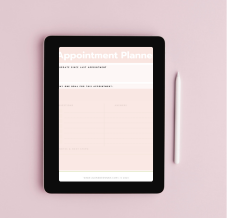
Start here: write your questions down before you go
Not just a few – everything. Because when you walk in prepared, you don’t just get better answers, you feel more confident asking them.
Here are a few important questions to get you started:
- What type of MS do I have and what does that mean for my prognosis?
- How many lesions do I have, where are they located, and what does that mean for future symptoms?
- What are my MS treatment options, and which do you recommend for me?
- What side effects are most common and which am I most at risk for?
- How will we monitor my MS progression over time?
You are allowed to ask questions. You are allowed to understand what’s going into your body.
That’s not being difficult, that’s being informed. Remember, this is day one for you. Your doctor got to ask questions in medical school as he was learning about this disease, so this is your turn to ask questions to develop your own understanding. And that’s what helps you feel confident in the decisions you’re making.
It is completely reasonable to ask for something to be repeated, clarified, or explained in a different way. That’s not being “difficult.” That’s how you start advocating for yourself.
And like anything else, it gets easier the more you practice.
Feeling Overwhelmed Before Your Appointments?
If you’re sitting there thinking, “I don’t even know what to ask…” You’re not alone in that.
That’s exactly why I created Still You.
It gives you:
- simple scripts to use in your appointments
- clear explanations of the terms you’re hearing
- a place to organize everything so it’s not all in your head
There’s even a section for your family, so you’re not trying to educate everyone else while you’re still processing it yourself. Still You offers you the support need.
MS Treatment Options: How to Decide What’s Right for You
This is where most women get stuck after a multiple sclerosis diagnosis.
Again, you’re sitting in an appointment hearing medication names you’ve never heard before and looking at MRI results you don’t really understand. You’re nodding along like you’re following, but really you’re thinking: I have no idea what to do.
And then comes the big question… “What treatment do you want to start?”
You’re being asked to make a major decision before you’ve even had time to process the diagnosis itself.
So let’s take the pressure off. You are not trying to find the perfect MS treatment plan. You are choosing a plan that feels right in the moment
Because here’s what matters: timing. MS progression doesn’t just wait while you decide. The longer inflammation goes unaddressed, the harder it becomes to reverse later. I’m not saying this to create fear, I’m sharing this because it’s important information for you to know.
That doesn’t mean panic.
But it does mean don’t stay stuck.
Whether it’s:
- a DMT (disease-modifying therapy)
- an MS diet
- or a combination of both
It’s completely normal to feel unsure right now. There’s no way to feel 100% certain. Waiting for certainty will keep you stuck longer than anything else.
So instead of waiting for a feeling, give yourself permission to make the best decision you can with the information you have today and move forward. You can adjust as you learn more. You are not locked into one treatment plan forever.
Need help preparing for the DMT conversation with your doctor?
Check out: Deciding on MS Medications: How to Make the Best Choice for You.
Understanding MS Diet + Lifestyle
Now, let’s step into the diet debate. You start hearing stories about women who have changed their diet and are feeling better… more energy… fewer symptoms… more in control of their body again. So you bring it up to your doctor. And they say something like, “Just eat whatever you want. Diet doesn’t really matter.”
And now you’re stuck. Because part of you is thinking, Okay, but then why are some people seeing such a big difference?
Let me give you a little more context, so you can make sense of it all. Because my neurologist said the same thing to me back in 2016 but now is saying that my 10 years of stable MRIs is “great data” that diet works.
Here’s why.
Does Diet Really Impact an MS Diagnosis?
About 80% of your immune system lives in your gut. And MS is an autoimmune disease. So, food isn’t a cure for MS, but when most of your immune system lives in your gut, what you eat is directly influencing the system involved in this disease every single day.
Then comes the next layer…You start researching MS diets, and suddenly it feels like:
No gluten.
No dairy.
No sugar.
No anything you actually enjoy eating.
Now instead of feeling empowered, you feel overwhelmed… again.
So let me simplify this for you. You do not need to overhaul your entire life right now. You don’t need to follow every rule you see online. What matters most is what you do consistently.
And this is where most women get stuck… thinking, “I get it… but how do I actually do this in real life?”
Like:
What do I eat?
What do I cook when I’m exhausted?
How do I keep up with this?
That’s exactly why I created Healing Habits: A realistic plan that’s designed specifically for women living with MS who want to feel like themselves again.
Inside Healing Habits, I walk you through things like:
- simple, go-to meals you can make without overthinking
- how to stock your kitchen so you’re not starting from scratch every day
- having 2–3 meals you can make in 10 minutes with what’s already in your kitchen
- so you’re not Googling “healthy recipes” at 6pm when you’re exhausted
- and simple routines around food, sleep, hydration, and supplements
But what makes this different is you’re not doing it on your own. You get weekly coaching support and a community of women walking this same journey with you.
You don’t have to do this alone my friend.
From One MS Sister to Another
If you’ve made it this far, congrats.
Take a breath and notice what feels even a little different than when you first started reading this. Maybe things feel a bit clearer, a little more grounded, or maybe you still feel overwhelmed… and that’s okay too.
You’re not supposed to have all the answers right now. You’re not supposed to remember everything you just read. This was just meant to be a conversation from one MS sister to another. A way to slow things down… and start to make sense of what’s happening.
You’re not behind. You’re not doing this wrong. You’re just at the beginning.
And you don’t have to walk through this alone.
Want a Simple First Step?
If this is something you want to explore, I’d love to help you take that first step in a way that actually feels doable.
👉 Join my free webinar
How to Help Slow MS Progression Starting with Just One Habit
Related Posts For a New MS Diagnosis
Full Podcast Transcript
Read the full transcript here:
S9E3 Newly Diagnosed With MS What No One Tells You After the Diagnosis
[00:00:00] If you've been newly diagnosed with multiple sclerosis, you're probably sitting there thinking, what just happened to my life? Your mind is racing. You're Googling symptoms, progression, diet, DMTs. Just trying to make sense of all of it, and somehow ending up with even more questions than answers. I get it.
I walked this firsthand and I've since helped thousands of women walk through this exact moment. And now I wanna help you. In this episode, I'm walking you through exactly what matters in those early days after a diagnosis. The things I wish someone had explained to me from the very beginning. Think of this as our conversation in the parking lot after that appointment where somebody finally helps you make sense of what's going on and helps you take that first step.
And before we get started, I wanna invite you to something special. Living with MS can feel overwhelming, but [00:01:00] one habit can shift everything. That's what I'll show you inside my free webinar. How to Help Slow MS progression, starting with just one habit. Think of it as your first step towards more energy, confidence, and hope.
Save your seat at all. brennan.com back slash webinar. Welcome to my MS podcast, where women with MS learn how to slow progression and live a life they love. I'm Alene Brennan, your Ms sister and a practitioner who knows the science and the reality of living this too. Each week I share simple.
Science-backed habits to boost your energy, stay consistent and feel like yourself again, because Ms. May be a part of your story, but it doesn't get to write the ending. Hello, my friends, and welcome to this very special episode today. Just planning it alone. It has already [00:02:00] become one of my favorite episodes because it finally gives voice.
To an experience that we've all had, and very few people in our world can actually understand. If you are newly diagnosed and you just stumbled upon this episode, hello and welcome. My name's Alene and I am your new fellow Ms. Sister, and this message is likely coming in perfect timing. If you've been around for a while, you've been one of my loyal podcast listeners.
Thank you for coming back. I'm so, so glad that you're here. And I wanna say, you may be thinking that this episode might not apply to you because you've been living with MS for years, but I wanna invite you to listen anyway because it may help you understand and process your diagnosis in a way you have yet to do.
Even after all of these years. So let's start with the moment that united Us all the [00:03:00] moment you heard those three words that changed everything. You have Ms. It's a moment that nobody prepared us for. It's a moment we never expected to be part of our story yet. Here it is. I have been there, and in a minute I'm gonna walk you through exactly what to focus on in the first 30 days so that you don't get stuck in that spiral.
But first I wanna share with you my diagnosis story, not only because I'm often asked about it, but because it changed how I approach this now. So I was 36 at the time I was diagnosed, and to give you a little backstory, I studied nutrition in college. I attended culinary school in New York City. I graduated from the Natural Gourmet Institute, and I was head of the nutrition department at one of the most prestigious health clubs in our area.
I was a yoga instructor, a personal trainer. I was basically quote unquote, the healthy one. And then my neurologist told me [00:04:00] I had relapsing remitting MS and basically walked out of the room. Now, obviously I'm exaggerating, but not by much. I, of course, later found out that my doctor was notorious for having the worst bedside manner.
Thank you very much, and lucky me for getting him to deliver the MS diagnosis. Right? But the reality is, even with the best neurologist, you are still in a state of shock and can't wrap your head around what is being said. I remember leaving that exam room, walking down the hallway towards the waiting room, thinking like, oh.
What just happened again? I was 36. I wanted to be growing my career, getting married, having a baby. This diagnosis wasn't exactly enhancing my dating profile, and while I knew that this appointment was the one that made it real after all of the tests. The spinal tap, the repeat MRIs, like all of it. I knew that this was the one that would definitively put MS on my medical chart or not, [00:05:00] and there it now was.
But if I'm being honest, I also was secretly hoping that my doctor would call me later that day and say, Aileen, I'm so sorry we made a mistake. I misread your MRI and you actually don't have ms. This is all just gonna go away. Right. Like we all want that moment. This is all a mistake and it's just gonna go away.
That didn't happen for me. And I'm guessing it didn't happen for you either. Well, as I mentioned, I was 36 single at the time, so I had asked my sister to come with me to the appointment, so she came in the doctor's appointment with me. My dad came along for good measure as dad's do, but he sat in the waiting room, so my sister knew the results.
And I remember walking out, like doing everything that I could to hold back my tears. Not because I wasn't scared, I was terrified, but because I didn't wanna say the words out loud yet, I wasn't ready. It made it too real. So I looked at my sister and I said, you tell him I can't, because I didn't wanna be the one to tell my [00:06:00] dad that his daughter now was diagnosed with multiple sclerosis, just six.
Weeks after he lost his wife, my mother to cancer. And it also didn't help that my dad knew a woman at church who also had ms, but was living a very advanced stage of it. So of course he was seeing the worst case scenarios with her, but now I had the same diagnosis as her. So how could he not go to that place in his mind with me?
So I made a beeline for the front desk. My only focus was scheduling those follow up appointments. And then I remember as we were in the elevator going down to the parking garage, like I felt the pressure, like how am I gonna respond to this? Am I gonna fall apart or am I gonna do what I always do? Just put a smile on and push through like.
Find that silver lining. Right? And the reality is, I think I did a little of both. Like I tried smiling on the outside, but I was completely falling apart on the inside. Like my world [00:07:00] just shattered. And I'm willing to bet you did some version of that yourself. It's what so many of us do. And then we go straight into survival mode, trying to figure everything out, trying to stay quote unquote strong.
Trying to get ahead of it. I get it. You don't want MS to take anything away from you? I didn't either. And if this is where you are right now, I wanna just pause before we jump into all of the to-dos and all of the details of your first 30 days because there's something so critical. We need to do first, and that is addressing the state of your nervous system right now, addressing the emotional rollercoaster that you are on.
And I know, I get it. You wanna hit fast forward through this section here. You're like, Alene, I don't have time to talk about my emotions. I'm trying to save my future. Right now. I have a lot more important things to do than talk about my feelings. I get it. [00:08:00] I get it. But here's the thing, your nervous system is in overdrive right now.
It is trying to process something enormous, so that is likely why everything else in your life feels more. Urgent right now. It feels so intense and you may be having people around you telling you to calm down. Everything's gonna be okay. Just relax. You're overreacting. Or maybe those are the things that you're telling yourself right now.
And here's what you need to know. This is not you not being able to handle things. Your nervous system is overwhelmed and it's trying to protect you. This is what most people miss, and until we address that, everything around you, the information you're trying to process, the decisions you're trying to make, all of it is going to feel.
Cluttered, intense, impossible. We need to help calm your nervous [00:09:00] system down so that you are actually able to think more clearly and not obsess over the worst case scenarios, which is why the more you Google. Sometimes the worst you feel you are like on Google Chat, Reddit, or all three searching things like Best diet for ms.
Will I end up in a wheelchair? How fast does MS. Progress? Is this thing curable? All of those are great questions to ask and I'm gonna help you figure this out. Your plan, your options, your next steps. But in the middle of all of this searching, you also need a place to process. What just happened because your nervous system needs to feel supported, and when it does, everything gets easier.
Your thinking, your decisions, your ability to move forward. So before we go any further, let's give your nervous system a little TLC in this moment. I promise it won't take long. Three breaths. That's all that we are doing. So wherever [00:10:00] you are right now, if you have the ability to close your eyes or take a soft gaze onto the floor, do so.
If you're walking or driving, obviously keep those eyes open. But wherever you are, can you start by just rolling your shoulders up towards your ears and relaxing them down the back. Good. Roll the shoulders up towards the ears. Relax 'em down the back. Create length from your ears to your shoulders. Lift the crown of your head up towards the ceiling.
Relax your forehead, the muscles in your face, your jaw, tongue, and lips. Good. And from this place here, take a breath in. Exhale out. Inhale. Exhale out longer than you think you can.
Good last one's happening here. Breath in[00:11:00]
and out.
Can you feel a shift? Even just a subtle one from just three breaths. That's all that it is. Your nervous system needs some help right now. And that can start with something as simple as a single breath. So when you feel overwhelmed, when you're about to go into a doctor's appointment, when you're about to get online and start researching information, when you're about to have a conversation with a family member, a coworker, a friend, a neighbor, whomever it is, take a breath.
Your breath can help to shift your body from the sympathetic nervous system, your fight or flight state of stress into the parasympathetic nervous system where you can actually feel calmer. And guess what happens in that state? Your body can rest and [00:12:00] heal, so you're not only allowing yourself to.
Process the enormity of what you are going through right now in a much gentler way, but you're actually positioning yourself to make clear decisions and to support your healing. And it all begins with a breath. It's not gonna solve all your problems, but it's a really helpful starting point. So thank you for going through that exercise with me here.
I really wanted to start this conversation today with that 'cause I truly believe it will help you to even just understand the conversation that we're having here today. A little bit better. So now let's dive in and we're gonna start with how to prepare for neurology appointments after an MS diagnosis.
Because one of the hardest parts of this process yes, can be your doctor's appointments. And I'm sure this doesn't sound like a huge surprise to you because you may have been in a doctor's appointment feeling completely scattered, overwhelmed, or intimidated. [00:13:00] Same. Okay, same. You had questions that you wanted to ask, but then your mind went blank.
The minute the doctor walked in and 15 minutes later you're walking out thinking like, what just happened? I didn't even get to ask half the questions that I had, or maybe you asked the questions and felt shut down or dismissed. So now you're leaving even more confused than when you walked in. So you go home and you start searching online again, trying to fill in the gaps on your own.
And here's the part that nobody says you are trying to understand a disease on the fly that your doctor has had years. Years. They have dedicated their career to this disease. They have years to understand your brain, Ms, the central nervous system, the medications, all of it. This is. Day one for you, and you're trying to grasp all of this in a 15 minute appointment.
Yes, that feels [00:14:00] overwhelming. So instead of walking in, hoping that you will get what you need, I want to prepare you to make sure you do get what you need, and I want you to start by writing your questions down before you go in. We know our mind generates a lot of questions right in the middle of the night when you're driving, when you're in the shower, like it feels like it is just churning out question after question, and I want you to capture every single one of them because when you do, you are able to walk in more prepared, not just to get answers.
But to feel more confident in asking them, and I'm not saying that you're gonna go in and ask every single question, but when you capture them all, whether it's on a sheet of paper, on your phone, in an app, doesn't matter, find one place to capture them. That's gonna work well for you. And then before your appointment, [00:15:00] maybe in the waiting room.
Because my goodness, we certainly can wait a long time before the doctor comes in. You can prioritize them so that you know you're getting answers to your most important questions. And because I don't want you to start with a blank sheet of paper, my goal is to help guide you through this process. Here are a few important questions that you can add to that list.
Number one, what type of MS do I have and what does that mean for my prognosis? Two, how many lesions do I have? Where are they located and what does that mean for my future symptoms? This is a really important question to ask. How many lesions do I have? Where are they located and what does that mean for future symptoms?
It's an important question to ask because it can help you make a better educated decision on your treatment options. And that's the third question. What are my MS treatment options and which do you recommend for me? Fourth, what side [00:16:00] effects are most common? Because we know that they have to document all side effects when they're doing studies on the medications.
But what are the most common side effects? And ask this one too. Which am I most at risk for? Everyone's going to have a different risk factor for those side effects. So ask which you are most at risk for? And then lastly, how will we monitor MS progression over time? Look, you are allowed to ask questions.
You are allowed to understand what is going on in your body. That's not you being difficult, that is you being educated. And remember, this is day one for you. Your doctor got to ask questions in medical school as they were learning about this disease. So this is your turn to ask questions, to develop your own understanding, and that's what will help you feel more confident in making decisions.
And if you are sitting there thinking like, okay, Alene, this is a breath of [00:17:00] fresh air. Like, thank you for saying this. And also I still don't know really how to start with all this. I never really had to advocate for myself with my doctor, and that feels really uncomfortable. You are not alone. And because I heard from so many of you struggling with this, I actually created something called Still You, because I remember being in this exact moment feeling like I had to like.
Sprint up to speed on how to advocate for myself in a doctor's appointment. So I created something that gives you the tools to have the confidence to advocate for yourself and partner with your doctor in creating a plan that feels right for you. Again, 'cause I remember trying to track everything, ask the right questions, and feeling like my brain just couldn't hold it all in.
So instill you. I give you real scripts that you can use in your appointments so that you're not just sitting there thinking like, I don't even know what to ask. I don't, how do I ask this question so that my [00:18:00] doctor will take me seriously? That's what is inside of here. It also breaks down a lot of terms that you're hearing.
With simple definitions so you can actually understand what is being said in these conversations versus just nodding along and trying to Google everything later, and it gives you a place to capture everything after your appointments so that you're able to stay on top of things. And then of course, because I know there's the added pressure of not only you trying to understand this and get up to speed, but then when you share the news with your family and friends, all of a sudden you feel like you're having to educate them on something you are trying to understand.
Right. And at some point you're like, enough already enough. This is just too much right now. I get it. And that is why there is an entire section still you with resources for your family and friends. So you are not trying to educate everyone else while you're still trying to process it yourself. [00:19:00] So it's kind of like your survival guide.
For your diagnosis so you can start to feel more grounded and actually move forward with a plan. So if that feels like a resource that you want in your hands right now, you can head on over to alene brennan.com/new. That's where I'm gonna have the show notes and all of the resources that I'm mentioning on this podcast today.
Lene brennan.com/new like NEW. It'll be the show notes version of this podcast again, with all of the resources linked. So we wanna be more prepared when we are going into our doctor's office. And that leads us to that next big question. What treatment plan do you wanna start? This is the moment where many women get stuck after a multiple sclerosis diagnosis because you're sitting in the appointment hearing medications you've never heard of.
And looking at MRI results, you don't really understand and you're nodding [00:20:00] along like you get it, but really you're thinking, I have no idea what is being said. Definitely don't have any idea what decision to make. You are being asked to make major decisions before you've even had time to process the diagnosis itself.
So let's, for a moment, take that pressure off. You are not trying to find the perfect MS treatment plan. You are choosing a plan that feels right in this moment because here's what matters. Timing. MS. Progression does not wait while you decide. The longer inflammation goes unaddressed, the harder it becomes to reverse.
And my friend, I am not saying this to scare you. I am saying this because this is important information for you to know about the disease in your body. And that doesn't mean to panic. I'm not suggesting that at all. I want to make sure you [00:21:00] don't get stuck either. So whether it is a DMT, an MS diet, or a combination of both, it is a personal decision.
There's no one treatment plan that's going to work for everyone. It's a personal decision. But it's one you need to make and I get it. It is completely normal to feel unsure about it right now. There's unfortunately no way to have a 100% guarantee on anything in life, and definitely not when it comes to our health.
But waiting for a moment of certainty will keep you stuck longer than anything else. So instead of waiting for that feeling, give yourself permission to make the best decision you can With the information that you have today, in this moment, you can always adjust later. You are not locked into one treatment plan for.
And if you need a little help weighing out the options of DMTs and preparing for that conversation with your [00:22:00] doctor, I have an entire episode on this podcast, specifically on deciding on MS medications and how to make the best choice for you. So I will also link that episode up into the show notes of today's episode over@allieandbrennan.com slash new.
Alright, so now let's dive into the next topic here. We talked about preparing for your doctor's appointments. We talked about. Making a decision on your treatment plan. Now, to no surprise, I wanna talk about MS. Diet and lifestyle. And this is something that creates a lot of confusion and I get it because you hear stories of women who are feeling better after changing their diet.
So you ask your doctor, can I just follow an MS diet? And if your doctor is anything like mine. They say, eat whatever you want. Diet doesn't matter. Great, thank you very much, doc. And you're left thinking like, then why are these people getting results? You see some people who are swearing by diet and then you [00:23:00] go and talk to your doctor and he completely shuts the idea down and makes you feel foolish for even asking the question to begin with.
So let me give you a little context to help make sense of it all because my neurologist said the same thing to me back in 2016. Eat whatever you want. Diet doesn't matter. Now my neurologist is saying that my 10 years of stable MRIs is quote unquote great data. That diet works. Here's why. About 80% of your immune cells lives in the lining of your gut.
80% of your immune cells lives in the lining of your gut. MS is an autoimmune disease. So if 80% of our immune cells live in the lining of our gut, that's really good information to know. And by changing the food on our plate, we can help to change the immune response and help to reduce inflammation in our body when we are living with a chronic inflammatory disease.
So as food, a cure? No, I get that. [00:24:00] But what you eat even today, can influence your body. Your body is constantly renewing itself, so when you change the food on your plate, you are helping to build better health for tomorrow. So that's the first step in understanding diet and lifestyle. But then let's take the next step here.
You're intrigued. So you start looking online again, Google Chat, Reddit, whatever. Then you go down this rabbit hole and you come up with this list of no gluten, no dairy, no sugar, no anything. You actually enjoy eating, and suddenly you're overwhelmed all over again. You were overwhelmed by your diagnosis.
You were overwhelmed with the treatment options. You had this glimmer of hope about diet, and now that immediately got shut down because you're overwhelmed again, trying to figure out how you can. Actually make these ultra restrictive recommendations realistic in your everyday life living with ms. So let me simplify this here.[00:25:00]
You do not need to overhaul your entire diet right now. You don't need to follow every single rule you see online. What matters most is what you do consistently, and that can start with small habits. But I know this is where many women get stuck thinking, alright, I get it, but how do I actually do this in real life, like consistently Aileen, without becoming overwhelmed, I've been there too, trying to change everything at once.
What I'm eating, what I'm sleeping, what supplements I should be taking. And you do it for a few days if you're lucky. Then everything falls apart. That is exactly why I created my program Healing Habits, because healing doesn't come from doing something once perfectly. It comes from doing simple things consistently.
Inside healing habits, I walk you [00:26:00] through things like simple go-to meals that you can actually make without overthinking or how to stock your kitchen so that you're not starting from scratch every single day, like having two or three meals that you don't even have to think about, or things that you can make in 10 minutes or less with ingredients you already have in your kitchen so that you're not Googling healthy recipes at 6:00 PM when.
Ms. Fatigue has completely shut you down, and it has easy ways to cook veggies so they, they actually taste good. And it teaches you how to build simple routines around things like supplement hydration and sleep. But what makes the biggest difference is not the information that's in there, it's the coaching support.
You're not just receiving more information and left to figure it out on your own inside healing habits. I actually am coaching you every step of the way so that if you feel stuck, unsure, or feel like you're falling off track, I'm there to guide you [00:27:00] so that you can keep the momentum going. Long enough to get the results.
And you're also surrounded by a community of women who get it, women who are walking the same journey right alongside you. Because I know this isn't about knowing more, there is a plethora of information out there. This is about having the support to figure out how to actually implement these recommendations in real life and do it alongside people who get it.
That is where real change starts. So I'll link all the details to that in the show notes over on aline brennan.com/new. And of course, if you have any questions about it, feel free to reach out to me. I'm always in the dms on Instagram. You can email me whatever works best for you. Would love to hear from you.
But for now, I'm gonna wrap this conversation here and I want to leave you with this note. You don't have to have everything figured out today. You're not supposed to remember. Everything you just heard. Even on this podcast, you're not supposed to have all of [00:28:00] the answers yet. If anything today was just meant to be a conversation from one Ms.
Sister to another, a way to help slow things down and start making sense of what is happening. Because right now you are processing something big and likely not. Giving yourself enough credit for what you are actually going through. That takes time. So if your mind is racing later today, or you find yourself back in that spiral, take a breath and begin again.
You don't need your whole future figured out, just your next step. And that first step may be, again, Allie and brennan.com/new. Print it out and let that be the start of your plan. And more than anything I want you to know you are not behind. You're not doing this wrong. You're just at the beginning and you don't have to walk through this alone.
I am right here with you and I am [00:29:00] so glad that you decided to hit play on this episode today, and I hope that you send me a little note afterwards and that you too become a regular in this podcast community. Take care my friend. And that's it for today's episode of my MS podcast. I hope you're walking away with one small step you can put into practice today, because that is how real change happens.
And remember, MS has its own biological clock, which means this. Sooner you start, the more power you have to influence your future. The best time to begin is now. That's why I created my free webinar. How to Help Slow MS progression, starting with just one habit today. Grab your spot at alene brennan.com/webinar.
See you [00:30:00] there.





+ show Comments
- Hide Comments
add a comment